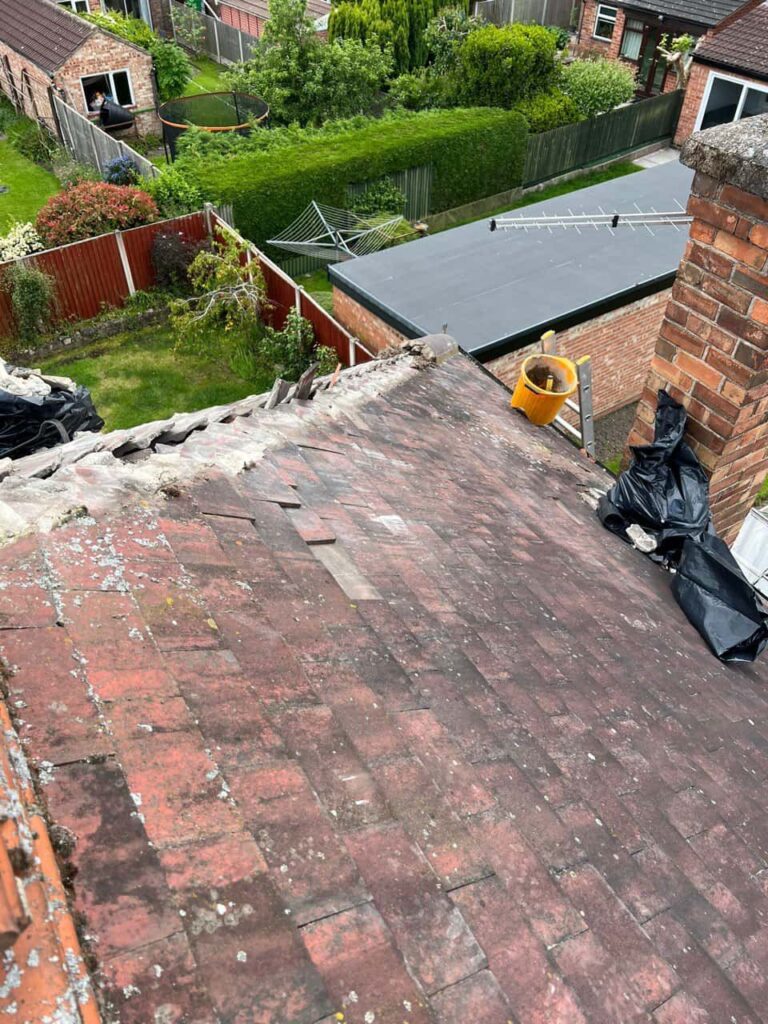
Roof damage can develop suddenly following strong winds, heavy rainfall or the failure of an already weakened component. Missing tiles, damaged flashing and torn flat-roof coverings can leave the structure exposed, allowing water to reach the underlay, insulation, timbers and interior of the property.
Emergency roof repairs are intended to stabilise the affected area and limit further deterioration. Depending on the damage and conditions, this may involve a temporary protective measure or an immediate permanent repair. The priority is to make the roof secure, reduce water ingress and prevent the defect from spreading.
For property owners in Thame, Oxfordshire, prompt professional attention can help protect both the roof and the rooms beneath it while the most appropriate repair is determined.
How Emergency Roof Repairs Protect the Property
They Reduce Continued Water Ingress
Once the outer roof covering has been breached, each period of rainfall can introduce more moisture into the structure. Water may travel beneath tiles or along timbers before appearing on a ceiling, so the visible damp patch may not show the full extent of the affected area.
An emergency repair can cover, seal or restore the entry point, helping to keep additional water out. Acting promptly may reduce the risk of moisture spreading into neighbouring sections of insulation, decking and internal finishes.
They Secure Loose Roofing Materials
Loose tiles, slates, ridge components and pieces of flashing can move further when exposed to wind. One displaced element may also reduce the support or weather protection provided to materials around it.
Professional stabilisation may involve refixing loose components, replacing missing materials or temporarily securing an area until a full repair can be completed. This helps stop a localised defect from becoming a wider roofing problem.
They Protect Exposed Underlying Components
Tiles, slates and flat-roof membranes form the primary barrier against the weather. When these materials are damaged, the layers beneath them may become exposed.
Underlay can provide secondary protection, but it is not intended to remain continuously exposed. If it is already aged, torn or poorly supported, water may pass through to battens and roof timbers. An emergency response restores protection over the vulnerable section and reduces the time these components remain exposed.
They Can Limit Structural Deterioration
Roof timbers and decking can be affected when moisture is allowed to remain for extended periods. Timber may become stained, softened or distorted, while flat-roof decking can lose stability beneath the covering.
Emergency repairs cannot reverse deterioration that has already occurred, but they can help prevent further saturation. The affected structure can then be inspected to establish whether drying, localised replacement or more extensive work is required.
They Help Contain Flat Roof Damage
Splits, punctures and lifted seams on a flat roof can allow water beneath the surface covering. Moisture may then spread between layers, making the affected area larger than the visible defect.
A professional inspection can identify whether a local repair is suitable or whether a temporary waterproof covering is needed. Stabilising the damaged section quickly helps contain the problem while the condition of the surrounding material is assessed.
They Address Vulnerable Roof Junctions
Some urgent leaks originate around chimneys, valleys, roof edges, vents or other junctions. These areas manage concentrated water flow and depend on correctly fitted flashing, mortar or weatherproof seals.
If a junction fails, simply covering the internal damp patch will not resolve the cause. Emergency roof work focuses on the external weakness, restoring protection or applying a suitable temporary measure until comprehensive repairs can be carried out.
They Make the Roof Ready for Further Assessment
Severe weather or active water ingress can make it difficult to complete every repair immediately. Stabilisation creates an opportunity for the roof to be assessed more thoroughly when access and conditions are suitable.
The follow-up inspection can determine:
- Where the damage originated
- How far moisture has travelled
- Whether nearby materials have also loosened
- If the underlay or roof deck has been affected
- Whether a temporary measure should be replaced with permanent work
This staged approach ensures that the immediate problem is contained without overlooking hidden damage.
Temporary Work Is Not Always the Final Repair
An emergency repair may sometimes provide a complete solution, particularly when the defect is small and safely accessible. In other circumstances, temporary protection is the most responsible first step.
Temporary work may remain vulnerable if it is left beyond its intended purpose. The roof should therefore be reassessed and any necessary permanent repair completed once conditions allow. This ensures the cause of the damage is addressed rather than repeatedly covering the symptom.
Signs That a Roof May Need Urgent Attention
Prompt professional assessment should be considered if you notice:
- Active dripping or rapidly spreading ceiling marks
- Missing or visibly displaced tiles
- Loose materials at the roof edge
- Torn or lifted flat-roof covering
- Daylight visible from within the roof space
- Water entering near electrical fittings
- Sagging or softened ceiling areas
- Debris falling from the roof
Avoid climbing onto a damaged roof. Wet surfaces, weakened materials and unstable components can make access particularly hazardous.
Why Professional Stabilisation Matters
Emergency roofing work requires more than applying sealant to the most visible gap. The roofer must identify the likely entry point, assess the surrounding materials and select a method compatible with the existing roof.
LS Roofing Thame can inspect urgent roof damage in Thame, Oxfordshire, carry out appropriate stabilisation and explain what further work may be needed. This provides a structured response that protects the property without overstating the extent of the repair.
Conclusion
Emergency roof repairs help stabilise damaged materials, reduce further water ingress and protect the underlying structure. They can prevent a local defect from spreading while allowing the roof’s wider condition to be assessed properly.
Some emergency repairs provide a permanent solution, while others are designed to protect the property until full remedial work can take place. If your roof in Thame, Oxfordshire, has suffered sudden damage or is allowing water inside, contact LS Roofing Thame to arrange a professional assessment and suitable repair.
Call us on: 01844 394 496
Click here to find out more about LS Roofing Thame
Click here to complete our contact form and see how we can help with your roofing needs.