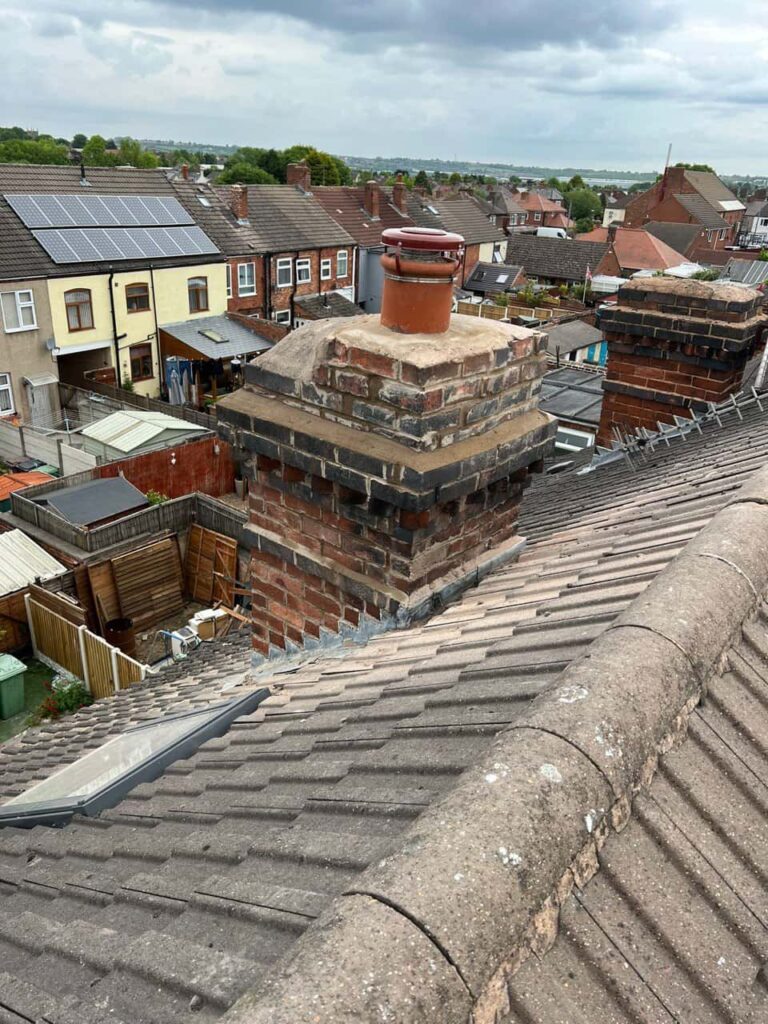
A roof can leak even when every tile appears to be present. Tiles form the main weather-resistant covering, but they are only one part of a complete roofing system. Water may enter through a small crack, failed junction, damaged underlay or poorly sealed detail without leaving an obvious gap that can be seen from ground level.
This can make the source difficult to identify. The damp patch inside the property may also be some distance from the original entry point because water can travel along underlay, battens and roof timbers. For homeowners in Thame, Oxfordshire, an accurate inspection is essential before any repair begins.
Why Roofs Leak When No Tiles Are Missing
A tiled roof relies on overlapping materials, secure fixings, sound underlay and correctly formed junctions to direct rainwater away. A fault within any of these components may allow moisture to enter while the tiles remain visibly in place.
A Tile May Be Cracked Rather Than Missing
Fine cracks can be difficult to see from below, particularly on weathered or heavily textured tiles. A tile may also be fractured beneath an overlap while its exposed section looks intact.
Water can pass through the crack during prolonged or wind-driven rain. The resulting leak may initially be intermittent, appearing only under certain weather conditions.
Tiles Can Move Out of Alignment
A tile does not need to fall from the roof to create a problem. Failed fixings, weakened battens or previous disturbance may allow it to slip slightly out of position.
Even a small change can reduce the correct overlap between adjacent courses. Rain may then be driven beneath the covering, especially when strong winds direct it upwards or sideways.
Roof Underlay Can Deteriorate
Underlay provides secondary protection beneath tiles. It helps direct any moisture that passes through the outer covering towards the eaves.
Older underlay can become brittle, torn or damaged around fixings. If it no longer performs correctly, a small amount of moisture beneath the tiles may reach battens, insulation or ceilings instead of draining away.
Lead Flashing May Have Failed
Lead flashing protects junctions where the roof meets chimneys, walls and other raised features. It can split, lift or pull away as materials move and weather over time.
The tiles surrounding the junction may remain in place, making the roof appear complete. However, a small opening in the flashing can admit significant amounts of water during heavy rain.
Valleys Can Become Damaged or Blocked
Roof valleys carry rainwater from adjoining slopes and are exposed to concentrated water flow. Cracked materials, displaced edges or accumulated debris can cause water to back up beneath nearby tiles.
A valley defect often becomes noticeable during sustained rainfall because the volume of water exceeds what the damaged detail can manage.
Ridge and Verge Mortar Can Crack
Mortar helps secure and weatherproof tiles along ridges and verges on some roofing systems. As it deteriorates, gaps may form around otherwise intact tiles.
Cracked mortar can admit water and allow further movement. Loose sections may also place additional strain on neighbouring tiles and fixings.
Roof Penetrations Can Lose Their Seal
Pipes, vents, roof windows and other penetrations create interruptions within the roof covering. These areas rely on flashings, seals and properly formed details to remain watertight.
A seal may deteriorate without affecting the surrounding tiles. Water can then enter around the penetration and travel internally before becoming visible.
Gutters Can Cause Water to Affect the Roof Edge
Blocked, sagging or incorrectly aligned gutters can cause rainwater to overflow towards the eaves. Prolonged exposure may affect fascia boards, soffits, underlay and the lower ends of roof timbers.
The roof tiles may remain undamaged while water reaches the property through the vulnerable roofline below them.
Condensation Can Resemble a Roof Leak
Not every internal damp patch is caused by rain entering from outside. Inadequate ventilation can allow warm, moist air to condense on cold surfaces inside the roof space.
Possible signs include dampness across several areas, moisture on roofing membranes and mould around timbers or insulation. A professional assessment should distinguish condensation from external water ingress before recommending repairs.
Why the Internal Damp Patch Can Be Misleading
Water rarely travels straight down from the entry point. It may follow:
- The surface of the underlay
- Rafters and other roof timbers
- Tile battens
- Pipes or cables
- The edge of insulation
- Ceiling joints
Repairing the area directly above a stain may therefore leave the actual defect unresolved. Effective leak detection involves examining the likely route taken by the water.
What Should a Roof Inspection Cover?
When no tiles are visibly missing, an inspection should consider the entire roofing system rather than focusing only on the internal mark. Important areas include:
- Cracked or misaligned tiles
- Fixings and battens
- Underlay condition
- Valleys, ridges and verges
- Chimney and wall flashings
- Roof penetrations
- Gutters and eaves
- Visible timbers within the loft
The timing of the leak can also provide useful evidence. Whether it appears during heavy rain, wind-driven rain or several hours after rainfall may help narrow down the source.
Why Professional Leak Detection Matters
Guessing at the cause can lead to unnecessary tile replacement while the real defect remains untouched. A professional roofer can assess how the roof is constructed, trace moisture patterns and inspect vulnerable details systematically.
Once the entry point and extent of any underlying damage are established, the repair can address the cause rather than simply covering the visible symptom.
Conclusion
A roof leak can develop without any missing tiles. Cracks, slight tile movement, deteriorated underlay, failed flashing, blocked valleys and defective roof penetrations can all allow water to enter while the covering appears complete.
LS Roofing Thame provides professional roof inspections and leak repairs in Thame, Oxfordshire. If you have noticed damp or water ingress but cannot see any missing tiles, arrange an assessment to identify the source and determine the appropriate repair.
Call us on: 01844 394 496
Click here to find out more about LS Roofing Thame
Click here to complete our contact form and see how we can help with your roofing needs.